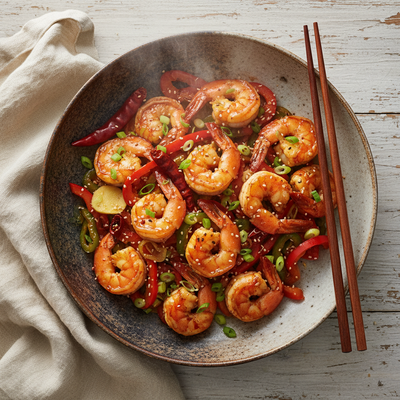
宫保虾仁 (gōngbǎo Xiārén), Gong Bao Shrimp, Kung Po Shrimp
(American Chinese)
(Chinese)
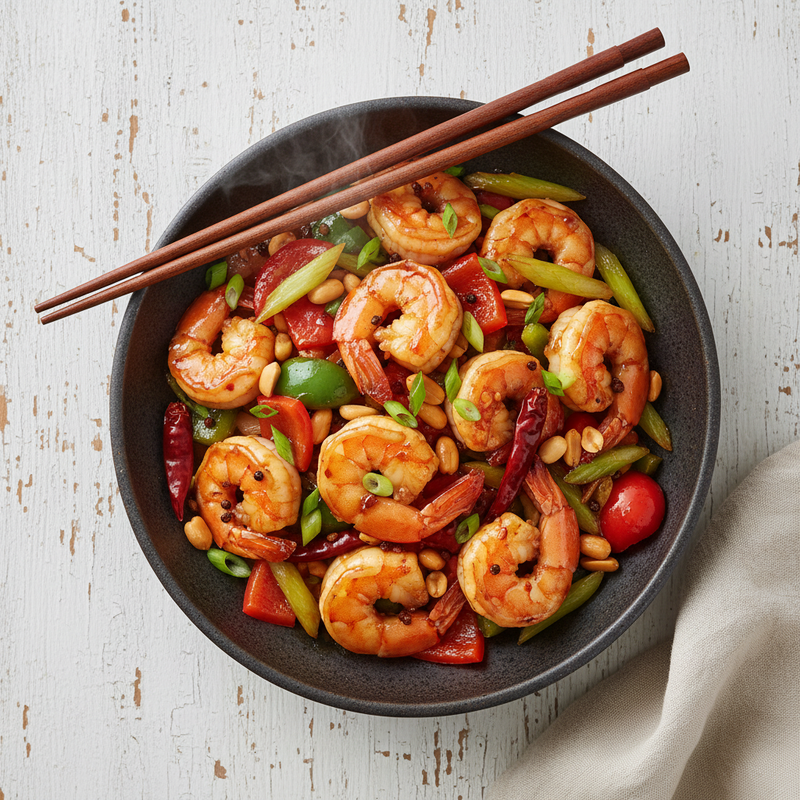
shrimps, peanut, dried chili pepper, scallions, garlic, ginger, szechuan peppercorn, soy sauce, black vinegar, sugar
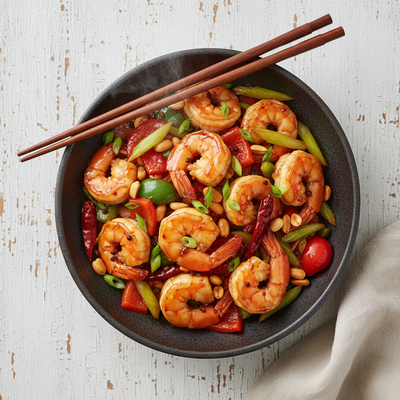
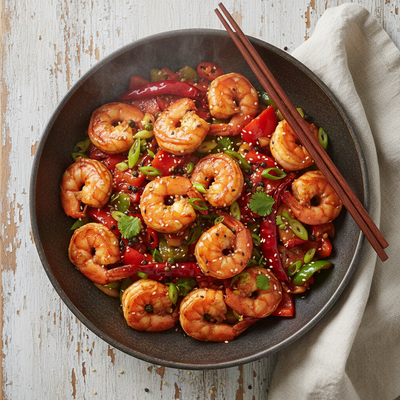
Kung Pao shrimp is a classic Sichuan stir-fry celebrated for its complex "lychee flavor"—a masterful balance of sweet, sour, and savory notes with a spicy kick. The dish features succulent, tender shrimp that are quickly seared to maintain a snappy bite, perfectly contrasted by the satisfying crunch of toasted peanuts. It offers a smoky, aromatic heat from scorched dried chilies and a subtle, tingling numbness from Szechuan peppercorns, creating a multi-dimensional eating experience that is both bold and refreshing.
The …
...See more
Kung Pao shrimp is a classic Sichuan stir-fry celebrated for its complex "lychee flavor"—a masterful balance of sweet, sour, and savory notes with a spicy kick. The dish features succulent, tender shrimp that are quickly seared to maintain a snappy bite, perfectly contrasted by the satisfying crunch of toasted peanuts. It offers a smoky, aromatic heat from scorched dried chilies and a subtle, tingling numbness from Szechuan peppercorns, creating a multi-dimensional eating experience that is both bold and refreshing.
The flavor profile is often associated with the "strange flavor" (guaiwei) family in traditional Chinese cooking because it harmonizes so many disparate elements. The glossy sauce, enriched by aged black vinegar and soy sauce, clings to the seafood without being overly heavy or greasy. Each mouthful delivers a burst of umami followed by a gentle tanginess and a lingering, fragrant spice that provides a clean finish on the palate.
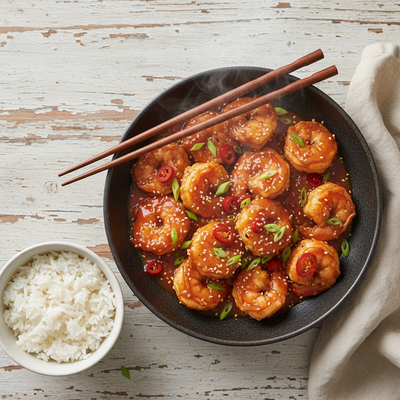
While Kung Pao chicken is the most famous iteration of this style, the shrimp version is a prized variation that highlights the natural sweetness of the seafood against the robust aromatics. It is a quintessential example of the "small stir-fry" (xiao chao) technique, where ingredients are cooked rapidly over high heat to preserve their distinct textures. Typically served hot, it is best enjoyed with a side of steamed white rice to soak up the flavorful, vinegar-laced sauce.
...See less
Created April 10, 2026 by: itisclaudio
Related:
1 of
1
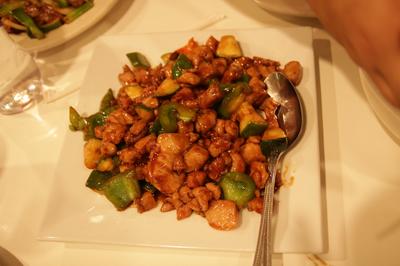
kung_pao_chicken